Wooden Montessori Busy Board: Sensory Skills for Toddlers
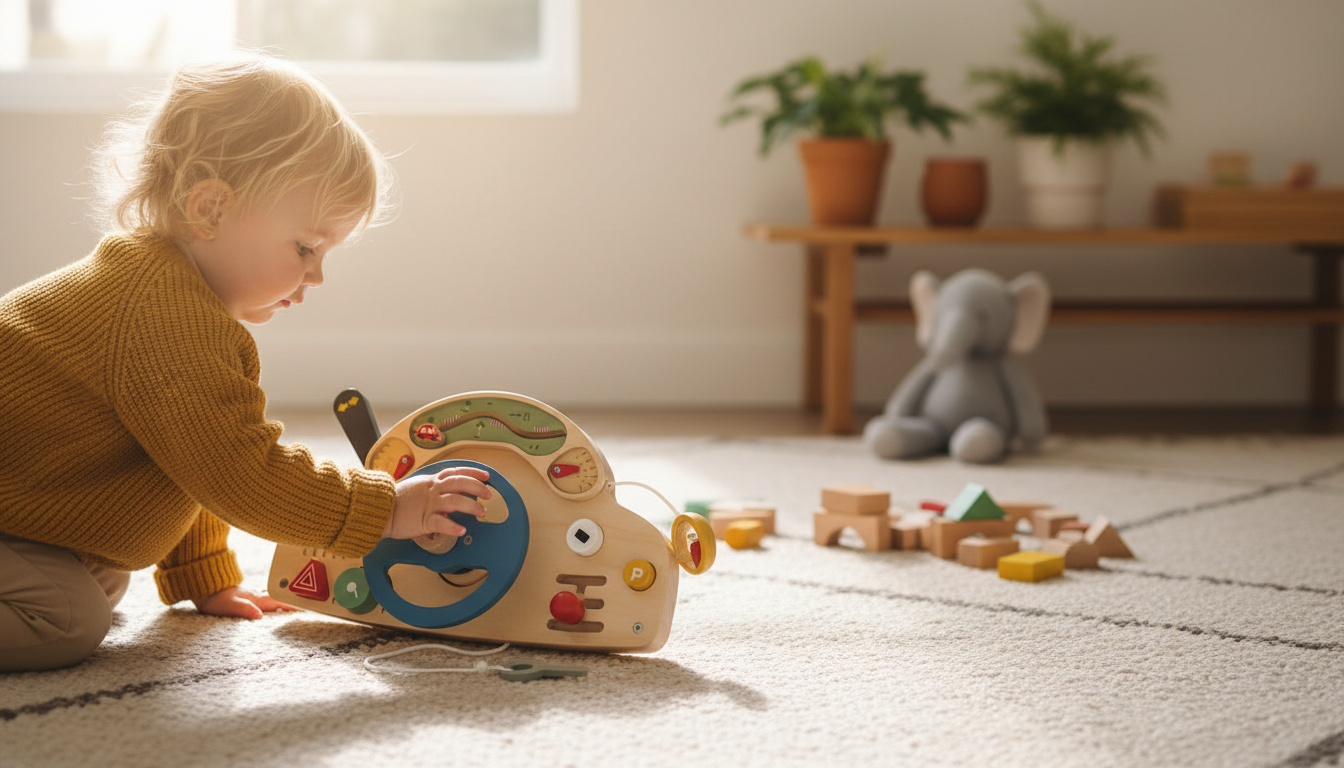
Wooden Montessori Busy Board for Toddlers: Sensory Play That Builds Fine Motor Skills
A wooden busy board offers hands-on, screen-free play that helps toddlers practice everyday motions—turning, sliding, buckling, and lacing—while exploring textures and cause-and-effect. This guide covers what a busy board supports developmentally, what to look for in a safe wooden option, and simple ways to use it for focused sensory learning at home or on the go. For more guidance, see Vanplay Montessori Busy Board for Toddlers – Wooden Montessori ….
What a Busy Board Helps Toddlers Practice
Toddlers learn best through doing. A busy board turns “real life” hand movements into repeatable mini-challenges that feel like play, especially when the board has predictable parts that respond the same way every time. For further reading, see Menu 1 – STAR Therapy Services, LLC.
- Fine motor strength: pinching, twisting, pushing, pulling, and grasping to build hand muscles used for writing and self-care
- Bilateral coordination: using both hands together (one stabilizes while the other manipulates)
- Hand–eye coordination: matching what the eyes see with precise finger movements
- Sensory processing: exploring different surfaces, resistance, and movement patterns in a predictable way
- Focus and problem-solving: repeating actions, troubleshooting how pieces move, and building persistence
These skills show up across early milestones—like dressing practice, feeding independence, and learning to manage simple fasteners. For a helpful reference on age-linked abilities, the CDC’s developmental milestone guidance can provide context for what many toddlers work on during the 1–3 year window.
CDC — Developmental Milestones (Toddler)
Why Wooden Montessori-Style Boards Are a Strong Choice
Montessori-inspired materials tend to be simple, sturdy, and purposeful—features that can help toddlers concentrate longer and repeat a movement until it “clicks.” A wooden board, in particular, offers a stable base that doesn’t flex as little hands pull, press, and tug.
- Natural material feel: wood provides a stable, warm surface and a grounded sensory experience
- Durability for repeated practice: sturdy boards can handle frequent use and toddler-level force
- Simple, purposeful activities: fewer “flashy” features can mean more concentrated skill-building
- Supports independence: practice with fasteners and simple mechanisms mirrors real daily tasks (zippers, buckles, laces)
Skills and common board activities
| Board activity | Primary skill | Everyday connection |
|---|---|---|
| Zippers | Pincer grasp + wrist control | Zipping coats and bags |
| Buckles | Bilateral coordination | Car seats, high chairs, straps |
| Buttons/snaps | Finger dexterity | Dressing skills |
| Laces | Sequencing + fine motor planning | Shoes and hoodies |
| Switches/turn knobs (if present) | Cause-and-effect + grip strength | Lights, faucets, toy levers |
| Gears/sliders | Hand–eye coordination | Opening drawers, moving latches |
Developmentally appropriate, hands-on learning is also supported by early childhood best practices that emphasize purposeful play and independence-building routines.
NAEYC — Developmentally Appropriate Practice
Choosing a Safe, Toddler-Friendly Wooden Busy Board
A great busy board is one a toddler can explore repeatedly without unexpected hazards or breakage. Before buying (and periodically afterward), it helps to “audit” the board the same way you would any frequently used toddler toy.
- Age-appropriate complexity: select mechanisms that match current ability (challenge without frustration)
- Smooth finish: sanded edges and corners; no splinters or rough spots
- Secure attachments: screws and parts should be firmly fixed and not easily loosened by twisting or pulling
- Non-toxic materials: child-safe paints/finishes; avoid strong chemical odors
- Size and weight: large enough to prevent easy bending; manageable for tabletop or lap play
- No small detachable pieces: reduce choking hazards and surprise break-offs during play
- Easy to clean: wipeable surfaces help maintain hygiene in shared or travel settings
For a practical checklist approach to toy safety and safe construction, the American Academy of Pediatrics offers clear guidance for choosing age-appropriate toys.
HealthyChildren.org (American Academy of Pediatrics) — Selecting Safe Toys
Using a Busy Board for Sensory Learning (Simple Routines That Work)
Busy boards work best when they’re treated like a short “work cycle,” not a long open-ended toy bin. Consistent, calm repetition helps toddlers build confidence and reduces the urge to fling the board or abandon it mid-task.
- “One skill at a time” focus: guide attention to one fastener (e.g., only the buckle) for 2–3 minutes
- Slow demonstration: model the motion once, then let the toddler try without hand-over-hand help unless needed
- Language pairing: name actions (“pull,” “slide,” “snap,” “turn”) to connect movement with vocabulary
- Progression approach: start with easier actions (Velcro, large zippers) before moving to laces or smaller buttons
- Calm corner tool: use during transitions (before meals, after daycare) to support regulation and reduce restlessness
- Travel play: keep the board accessible in a bag for quiet practice in waiting rooms or car rides (with supervision)
Ideas for Skill-Building Games (5 Minutes Each)
Care, Storage, and Supervision Tips
Featured Picks (In Stock)
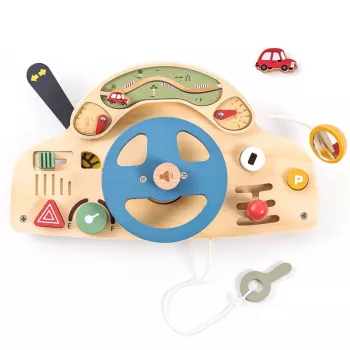
- Wooden Montessori Busy Board for Toddlers – Sensory Learning & Fine Motor Skills
- Jacquemus Le Chiquito Moyen Leather Handbag
- Off-White Cotton Script Skate Hoodie
Wooden Montessori Busy Board for Toddlers – Sensory Learning & Fine Motor Skills
Quick product snapshot
| Item | Details |
|---|---|
| Product | Wooden Montessori Busy Board for Toddlers – Sensory Learning & Fine Motor Skills |
| Price | $30.82 USD |
| Availability | In stock |
FAQ
What age is a wooden busy board best for?
Many wooden busy boards work well for ages 1–3 with supervision, but the best fit depends on your child’s interest and current hand skills. For younger toddlers, start with larger, simpler fasteners before moving to smaller buttons or laces.
Are wooden busy boards safe for toddlers?
They can be safe when built with smooth edges, secure hardware, and non-toxic finishes, and when they don’t have small detachable pieces. Ongoing supervision and routine checks for loosened parts help keep play safe over time.
How long should a toddler use a busy board at a time?
Short sessions—about 5 to 15 minutes—tend to work best, especially for skill practice without frustration. Stopping while it still feels manageable can make toddlers more willing to return to it during transitions or travel.








Leave a comment